Kidnapping in Nigeria between January and June 2021.

                      
2,371 people abducted in Nigeria in first half of 2021 

An average of 13 persons were abducted daily in Nigeria in the first half of 2021, according to a report by SBM Intelligence, bringing to 2,371 the number of persons kidnapped in the country within the first six months of the year.

SBM Intelligence  is a leading research consultancy group, versatile in the area of primary data gathering, and analyses of data that provides clarity relating to political, economic and social issues in Nigeria and West Africa.

This came as the former senator representing Kaduna central, Shehu Sani said yesterday that the north-west would be a better place, if the Federal Government could deal with bandits with the same vigour used against secessionists.

This is even as the abductors of the Emir of Kajuru, Alhassan Adamu, yesterday released the monarch but held on to his family members.

Similarly, Gombe State government said yesterday it had deployed local security in all institutions in the state to compliment the efforts of the police and other security agencies in efforts to ward off bandits.

On the number of people kidnapped in the last six months, the SBM report covered abductions from January to June.

It indicated that a total of 2,371 persons were abducted across 36 states of the federation and the Federal Capital Territory, FCT.

The tally was derived from media reports and the national security tracker of the Council of Foreign Relations.

Abduction — the new oil money of kidnappers

According to the report, N10 billion ($19.96 million as of June 30) was demanded as ransom for the kidnap victims.

However, the report did not state the total amount paid.

The highest number of kidnap victims, about 605, was recorded in February.

This was closely followed by March with 534 kidnap victims; May, 355 kidnap victims; while April, January and June had 316, 284 and 277 respectively.

Niger State, the hotbed of kidnapping

The report indicated that Niger State recorded the highest number of persons abducted, with 643 victims in 28 kidnap incidents, while 58 people were killed during the abductions.

This was followed by Zamfara State with 519 kidnap victims in seven incidents, leading to the death of 22 people, while Kaduna State recorded 360 kidnap victims in 26 incidents, leading to the deaths of 41 persons.

The kidnap victims in other states are; Abia (6), Abuja (50), Adamawa (3), Akwa Ibom (2), Anambra (14), Bauchi (3), Bayelsa (7), Benue (6), Borno (1), Cross River (4), Delta (51), Ebonyi (5), Edo (18), Ekiti (14), Enugu (15), Gombe (1), Imo (25), Jigawa (2), Kano (3), Katsina (236), Kebbi (81), Kogi (31) and Kwara (10).

Others include: Lagos (6), Nasarawa (44), Ogun (26), Ondo (17), Osun (23), Oyo (61), Plateau (10), Rivers (14), Sokoto (10), Taraba (46), and Yobe (4).

Schools were often targeted in the abductions that took place in the first half of 2021, with hundreds of students taken hostage in the north-west.

Reacting to the high incidents of kidnapping in the country, particularly by bandits, Shehu Sani, a former senator representing Kaduna central said, the north-west will be a better place if the Federal Government could deal with bandits with the same vigour used against secessionists.

The north-west had been the hotbed of banditry in recent times, with over 500 students kidnapped in the region by bandits this year alone.

The latest is the abduction  of 121 students in Bethel Baptist Secondary school in Damishi, Chikun LGA of Kaduna State, on July 5. Less than a week later, the Emir of Kajuru and 13 members of his household were abducted at his palace.

While bandits continue to wreak havoc in the north-west, security operatives have successfully clamped down on leaders of secessionist movements in the southern part of the country.

Last month, authorities arrested and extradited Nnamdi Kanu, leader of the Indigenous People of Biafra, IPOB, back into the country to face charges of treason.

In a similar development, DSS operatives declared Sunday Igboho, a prominent voice in the call for ‘Yoruba Nation’,  ”wanted” after raiding his home and killing two people.

Many have criticised the government for not extending equal level of commitment to tackling banditry.

Speaking on Arise TV yesterday, Senator Sani said: “I can say in comparative terms that there’s more interest for the government in going after secessionists than going after bandits. I’m not a supporter of secessionists and I believe that secession agitation are virtually wrong and we should work towards a united Nigeria.

“Abduction has become a daily tragedy in Kaduna State, many even go unreported. Those that are reported are either mass abduction or the abduction of prominent people. We have reached a point, today, in this state where the only local governments that are safe are two — Kaduna North and Kaduna South.

“All the other local governments in the state are under siege of bandits. We have never seen this kind of trouble and it appears that the abductions are even increasing by the day. All the four entrances to Kaduna State are under bandits’ attack.”

Emir of Kajuru regains freedom

Also yesterday, the Emir of Kajuru in Kaduna State, Alhaji Alhassan Adamu was released by his abductors after spending a night with his captors, while other 10 family members of the monarch are still in captivity,  the spokesperson of the Kajuru Emirate Council, Dahiru Abubakar, has disclosed.

Explaining how the emir was released, Abubakar said the emir was found in a nearby forest by his subjects while on their way to the farm.

His release came as it was earlier revealed that the bandits had contacted the emirate to demand N200 million as ransom for the emir and members of his family to be released.

Abubakar disclosed that the emir had since addressed his subjects, noting that he was in good condition, but would be taken to the hospital for medical check-up.

The monarch was kidnapped by bandits in the early hours of Sunday in Kajuru, headquarters of Kajuru Local Government Area of Kaduna State.

Kidnapping in Nigeria between January and June 2021.
2,371 people abducted in Nigeria in first half of 2021
An average of 13 persons were abducted daily in Nigeria in the first half of 2021, according to a report by SBM Intelligence, bringing to 2,371 the number of persons kidnapped in the country within the first six months of the year.

SBM Intelligence is a leading research consultancy group, versatile in the area of primary data gathering, and analyses of data that provides clarity relating to political, economic and social issues in Nigeria and West Africa.

This came as the former senator representing Kaduna central, Shehu Sani said yesterday that the north-west would be a better place, if the Federal Government could deal with bandits with the same vigour used against secessionists.

This is even as the abductors of the Emir of Kajuru, Alhassan Adamu, yesterday released the monarch but held on to his family members.

Similarly, Gombe State government said yesterday it had deployed local security in all institutions in the state to compliment the efforts of the police and other security agencies in efforts to ward off bandits.

On the number of people kidnapped in the last six months, the SBM report covered abductions from January to June.

It indicated that a total of 2,371 persons were abducted across 36 states of the federation and the Federal Capital Territory, FCT.

The tally was derived from media reports and the national security tracker of the Council of Foreign Relations.

Abduction — the new oil money of kidnappers

According to the report, N10 billion ($19.96 million as of June 30) was demanded as ransom for the kidnap victims.

However, the report did not state the total amount paid.

The highest number of kidnap victims, about 605, was recorded in February.

This was closely followed by March with 534 kidnap victims; May, 355 kidnap victims; while April, January and June had 316, 284 and 277 respectively.

Niger State, the hotbed of kidnapping

The report indicated that Niger State recorded the highest number of persons abducted, with 643 victims in 28 kidnap incidents, while 58 people were killed during the abductions.

This was followed by Zamfara State with 519 kidnap victims in seven incidents, leading to the death of 22 people, while Kaduna State recorded 360 kidnap victims in 26 incidents, leading to the deaths of 41 persons.

The kidnap victims in other states are; Abia (6), Abuja (50), Adamawa (3), Akwa Ibom (2), Anambra (14), Bauchi (3), Bayelsa (7), Benue (6), Borno (1), Cross River (4), Delta (51), Ebonyi (5), Edo (18), Ekiti (14), Enugu (15), Gombe (1), Imo (25), Jigawa (2), Kano (3), Katsina (236), Kebbi (81), Kogi (31) and Kwara (10).

Others include: Lagos (6), Nasarawa (44), Ogun (26), Ondo (17), Osun (23), Oyo (61), Plateau (10), Rivers (14), Sokoto (10), Taraba (46), and Yobe (4).

Schools were often targeted in the abductions that took place in the first half of 2021, with hundreds of students taken hostage in the north-west.

Reacting to the high incidents of kidnapping in the country, particularly by bandits, Shehu Sani, a former senator representing Kaduna central said, the north-west will be a better place if the Federal Government could deal with bandits with the same vigour used against secessionists.

The north-west had been the hotbed of banditry in recent times, with over 500 students kidnapped in the region by bandits this year alone.

The latest is the abduction of 121 students in Bethel Baptist Secondary school in Damishi, Chikun LGA of Kaduna State, on July 5. Less than a week later, the Emir of Kajuru and 13 members of his household were abducted at his palace.

While bandits continue to wreak havoc in the north-west, security operatives have successfully clamped down on leaders of secessionist movements in the southern part of the country.

Last month, authorities arrested and extradited Nnamdi Kanu, leader of the Indigenous People of Biafra, IPOB, back into the country to face charges of treason.

In a similar development, DSS operatives declared Sunday Igboho, a prominent voice in the call for ‘Yoruba Nation’, ”wanted” after raiding his home and killing two people.

Many have criticised the government for not extending equal level of commitment to tackling banditry.

Speaking on Arise TV yesterday, Senator Sani said: “I can say in comparative terms that there’s more interest for the government in going after secessionists than going after bandits. I’m not a supporter of secessionists and I believe that secession agitation are virtually wrong and we should work towards a united Nigeria.

“Abduction has become a daily tragedy in Kaduna State, many even go unreported. Those that are reported are either mass abduction or the abduction of prominent people. We have reached a point, today, in this state where the only local governments that are safe are two — Kaduna North and Kaduna South.

“All the other local governments in the state are under siege of bandits. We have never seen this kind of trouble and it appears that the abductions are even increasing by the day. All the four entrances to Kaduna State are under bandits’ attack.”

Emir of Kajuru regains freedom

Also yesterday, the Emir of Kajuru in Kaduna State, Alhaji Alhassan Adamu was released by his abductors after spending a night with his captors, while other 10 family members of the monarch are still in captivity, the spokesperson of the Kajuru Emirate Council, Dahiru Abubakar, has disclosed.

Explaining how the emir was released, Abubakar said the emir was found in a nearby forest by his subjects while on their way to the farm.

His release came as it was earlier revealed that the bandits had contacted the emirate to demand N200 million as ransom for the emir and members of his family to be released.

Abubakar disclosed that the emir had since addressed his subjects, noting that he was in good condition, but would be taken to the hospital for medical check-up.

The monarch was kidnapped by bandits in the early hours of Sunday in Kajuru, headquarters of Kajuru Local Government Area of Kaduna State.
4 killed,12 years old girl raped in Bihar 48 hours..

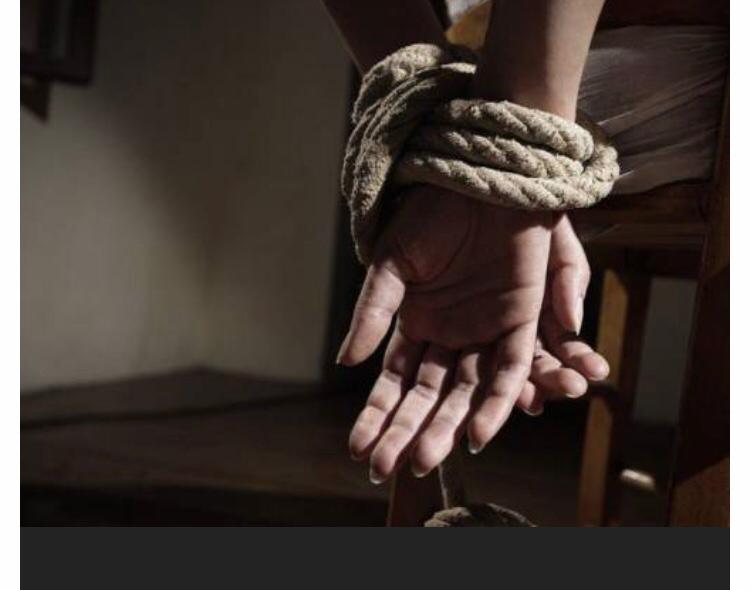
PATNA: Four people were killed and a minor girl was raped in three separate incidents in Siwan, Munger and Khagaria districts in the last 48 hours.
Residents of Kararua Sarave village under Mufassil police station area in Siwan district woke up on Thursday with the news of brutal killing of two youths. Their bodies were found dumped in an agricultural field.
The victims were identified as Shahil Azam and Sahbal, residents of Lal Quila and Shukla Toli in Siwan, respectively. They were missing since Wednesday.
Station house officer (SHO) of Mufassil police station Vinod Kumar Singh said the victims had gone to Hathua in neighbouring Gopalganj district along with their two friends for a cellphone on Wednesday.
While their friends, Rahul and Golu, returned home in Siwan, they did not. On Thursday morning, their bodies were recovered from Sarave village. “The bodies bore external injury marks, which suggested they were assaulted with a blunt substance,” he said. Police have detained Rahul and Golu for interrogation.
In another incident, police recovered the body of an unidentified woman from the premises of a school at Kathauli village under the Mairwa police station area in Siwan district. The body was sent to the sadar hospital in Siwan for autopsy.
In Munger, a 25-year-old driver of a goods van was shot dead by unidentified criminals near Nayagaon under Basudevpur police outpost late on Wednesday evening. The deceased was identified as Md Shaheed. Agitated over the incident, locals blocked the road and disrupted vehicular traffic for over two hours. The roadblock was lifted after the intervention of senior police officers.
In Khagaria, a 12-year-old girl was raped by three youths at a village under Parbatta police station area on Tuesday. The girl, however, lodged a complaint with the police on Wednesday as the offenders had threatened to eliminate her entire family if she revealed the matter to anyone.
The incident took place when the girl was returning home after offering prayers at a local temple. The accused forcibly took her to a nearby bush and took turns to rape her. Two of the accused were identified as Akshay Kumar (26) and Golu Kumar (24). The third accused is yet to be identified. SHO of Parbatta police station Sunil Kumar Biswan said the girl was sent to hospital for medical examination

Girl child

According to data, Nigeria is a `country of the young’ with almost half the entire 180 million strong population, 46 per cent, currently under the age of 15. The current total for children under the age of 5 stands at nearly 31 million while each year at least 7 million babies are born. While a little over one in three of Nigeria’s whole population lives below the poverty line, among children this proportion surges to 75 per cent.

When considering the low levels of birth registration, in some areas up to 62 per cent, known data about child health issues are likely to underestimate the true scale. A 2016 national campaign linked to healthcare services resulted in the registration of about seven million children, but large population growth is impacting progress.

Nigeria’s 40 million women of childbearing age (between 15 and 49 years of age) suffer a disproportionally high level of health issues surrounding birth. While the country represents 2.4 per cent of the world’s population, it currently contributes 10 per cent of global deaths for pregnant mothers. Latest figures show a maternal mortality rate of 576 per 100,000 live births, the fourth highest on Earth. Each year approximately 262,000 babies die at birth, the world’s second highest national total. Infant mortality currently stands at 69 per 1,000 live births while for under-fives it rises to 128 per 1,000 live births. More than half of the under-five deaths – 64 per cent – result from malaria, pneumonia or diarrhoea. Investment in this sector has been high in recent years although the proportion of patients able to access appropriate treatment remains low.

A new born baby and her mother are weighed in a UNICEF-supported health clinic in Muna Garage IDP camp, Maiduguri, Borno State.
UNICEF/2018/Naftalin
The rate of those mothers feeding new-borns exclusively with breastfeeding for the first six months of life which remains stuck at around 17 per cent of infants, unchanged over the last decade. Only 18 per cent of children aged 6-23 months are fed the minimum acceptable diet. While the government has sought to improve access to primary health care nationwide, committed to reaching a network of at least one PHC facility in each of the country’s 10,000 administrative wards, the work is still far from complete. Coverage can be patchy, bottlenecks in healthcare provision severe.

Poor access to water, sanitation and hygiene (WASH) remains a major challenge, contributing significantly to high levels of diarrhoea-related deaths. As of 2015, 57 million Nigerians were without access to improved water sources, while 130 million people without access to improved sanitation. An estimated 25 per cent of Nigerians practice open defecation on a daily basis.

Schoolgirls get safe water from a water facility near their homes
UNICEF/2017/Akingbulu
Nigeria accounts for more than one in five out-of-school children anywhere in the world. Although primary education is officially free and compulsory, only 67 per cent of eligible children take up a place in primary school. If a child misses school for even a short time there is only a low chance, only about 25 per cent, that the child will ever return.

Girls suffer more than boys in terms of missing out on education. In the north-east of Nigeria only 41 per cent of eligible girls receive a primary education, 47 per cent in the north-west. Social attitudes can also impact negatively on education rates especially in northern Nigeria. In north-eastern and north-western states, 29 per cent and 35 per cent of Muslim children, respectively, attend Qur’anic education, which does not include basic education skills such as literacy and numeracy. These children are officially considered out-of-school by the Government.

girls-in-clasroom
UNICEF Nigeria/2017/Abubakar
Nigerian children are vulnerable to a wide range of abuses and harmful traditional practices. The national legal framework for child protection is the Child Rights Act 2003, but to date, only 23 of 36 states have adopted the Act. Implementation is patchy with many local authority bodies unaware of their duties under the law. A national survey in 2014 found that 6 out of 10 children reported having suffered one or more forms of violence before reaching 18 years of age, with 70 per cent of those experiencing multiple incidents of violence. The country has the largest number of child brides in Africa: 23 million girls and women were married as children.

At 27 per cent, the prevalence of female genital mutilation/cutting (FGM/C) among girls and women aged 15-49 years is lower than in many countries where the practice is carried out, but Nigeria still has the third highest absolute number of women and girls (19.9 million) who have undergone FGM/C worldwide. It is more commonly practised in the south, driven by grandmothers and mothers-in-law aiming to curb promiscuity, prepare girls for marriage and conform to tradition.

With millions displaced by conflict in some parts of northern Nigeria, already significant challenges in healthcare, WASH and education have all been intensified. While accurate, up-to-date data is difficult in a fluid situation where so many millions have left their homes, one clear truth is that children have been affected acutely by the turmoil.

Learn more
People wait to get clean water at a camp in Borno
Link
Humanitarian Situation Reports
Snapshot of current needs and response – concise operational documents to support the coordination of humanitarian response

Visit the site
Schoolchildren by the class window
Programme
Social Policy
See how UNICEF is supporting the government of Nigeria to provide social protection in Nigeria.

Explore our work
People wait to get clean water at a camp in Borno
Programme
Emergencies
See how UNICEF is supporting the Government of Nigeria to respond to emergencies especially in northeast Nigeria.

Explore our work
A UNICEF-supported health worker teaching mothers the importance of breastfeeding.
Programme
Communication for Development
See how UNICEF is supporting the government of Nigeria to promote positive behaviour and social change integral to development programmes.

Explore our work
A girl with a glass of water
Programme
Water, Sanitation and Hygiene
See how UNICEF is supporting the Government of Nigeria to provide access to clean water for children

Explore our work
A baby is being weighed at a UNICEF-supported health centre in Borno State.
Programme
Health & HIV
See how UNICEF is supporting the Government of Nigeria to improve immunization coverage and provide access to quality healthcare.

Explore our work
A girl looks out of a window in northeast Nigeria
Programme
Child Protection
See how UNICEF is supporting the Government of Nigeria to protect children.

Explore our work
A child being fed with RUTF
Programme
Nutrition
See how UNICEF targets its actions to ensure good nutrition for every child in Nigeria

Girls suffer more than boys in terms of missing out on education in the north east of Nigeria only 41 per cent of eligible girls receive a primary education.some girls are molested by boys most especially the children that hawk most times the are being decived by their customers telling them that if the comply with them the would do anything for them therefore forcing them to sleep with them….The international day of the girl child is an international observance day declared by the united nations it is also called the day of the girl. October 11,2012 was the first day of the girl child.it is one of the critical areas of the 1995 Beijing platform for action.